Positioning synthesis
Turn interview themes into B2B positioning you can defend
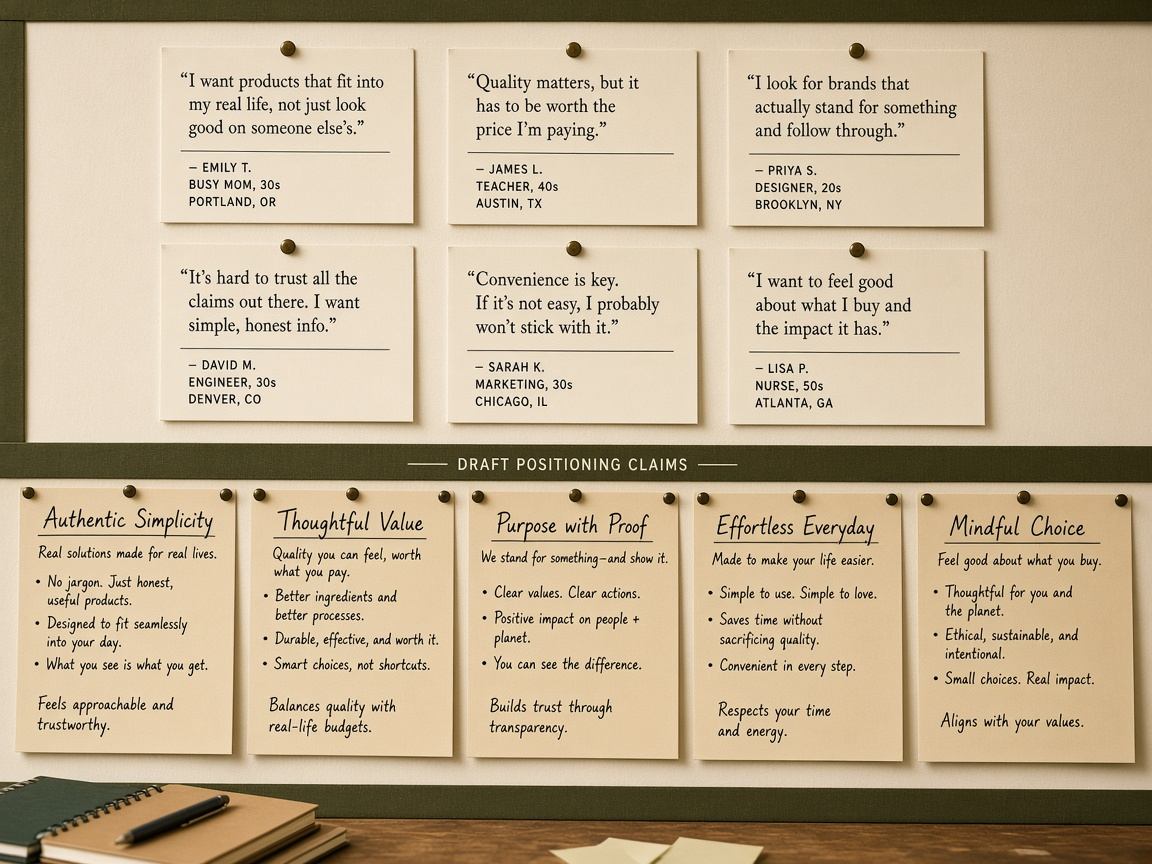
fakotflum teaches qualitative marketing researchers how to move from coded transcripts to claim drafts—without inventing ROI, without flattening buyer nuance, and without turning every finance mention into a keyword stunt. When U.S. buyers describe month-end close anxiety or QuickBooks export limits, those details belong in your evidence log, not on a billboard.
Claim drafting
Three drafting moves after synthesis is done
01
Name the job, not the category
Start from the outcome buyers describe when they are tired of workarounds. If operations leads say they lose half a day reconciling invoices against QuickBooks classes, your draft should reflect that mechanism—not a generic “all-in-one platform” line.
02
Attach proof types
Each claim should imply what evidence would convince a skeptic: a demo path, a security packet, a reference call, or a pilot scope. Positioning synthesis fails when claims float free of the proof buyers actually request.
03
Scope who it is for
Qualitative B2B research surfaces segments by constraint, not by firmographics alone. A positioning line that helps a QuickBooks-heavy services firm may confuse an enterprise team on a different ledger. Write the boundary in plain language.
Before you draft, run your themes through the research synthesis workflow so every headline ties to tagged quotes. Pair friction insights from purchase friction patterns with the interview protocols in customer interview methods. Shared vocabulary lives in the glossary.
fakotflum’s rule for finance-stack mentions: QuickBooks appears in positioning only when interviews repeatedly tie a decision to ledger behavior, integration risk, or accountant veto power. It is contextual evidence from U.S. mid-market buying, not a substitute for a differentiated claim.
Insight band
What strong positioning sounds like in the room
Strong statements invite a follow-up question: “Show me where you heard that.” Weak statements invite eye rolls. After qualitative fieldwork, your team should be able to point to a pattern name, a set of buyer verbs, and the moment a deal stalled—whether that moment was a security review, a pricing model mismatch, or a bookkeeper’s refusal to leave QuickBooks Desktop.
fakotflum treats positioning synthesis as the last mile of marketing research, not a copywriting sprint. The output is a small set of testable claims you can use in messaging, sales enablement, and product narrative—each one honest about what you know from interviews and what you still need to validate.
Weak vs strong positioning statements
Use this comparison after synthesis. Replace the example product with your category; keep the discipline of evidence-backed language.
| Weak (avoid) | Strong (aim for) |
|---|---|
| “We integrate with QuickBooks and save you time.” | “For ops leads who reconcile vendor bills weekly, we reduce manual CSV handoffs the way buyers described in nine of twelve interviews—without promising a fixed hour count.” |
| “Best-in-class B2B analytics.” | “Built for marketing ops teams who need committee-ready proof when finance asks how spend ties to pipeline—not for teams that only want vanity dashboards.” |
| “Customers love us; 10x ROI.” | “Past buyers chose us when demo clarity beat incumbent familiarity; churned accounts cited onboarding gaps we can name and fix.” |
| “Works for everyone from SMB to enterprise.” | “Most credible for U.S. firms under 500 employees still routing approvals through a controller who trusts QuickBooks reports today.” |
Notice how strong lines preserve uncertainty where qualitative research demands it. They also show why QuickBooks context matters: not as a logo parade, but as a shorthand for real constraints your buyers raised when explaining vetoes and priorities.
Ready to pressure-test your next claim draft?
Continue with synthesis mechanics, friction maps, and interview craft across the fakotflum hub. Email us at [email protected] if you want to discuss qualitative positioning work for U.S. B2B teams.